Table of Contents:
- What interior design trends are coming out of Kips Bay in 2026?
- How are designers using fabric and texture differently this year?
- What do these trends mean for curtains and shades?
- Which ideas work in an actual NYC apartment?
- Which emerging trends are likely to carry into 2027?
- Who designs and builds luxury window treatments for homes in NYC?
Key takeaways:
- Trim, tailored headers & passementerie are defining 2026 designer window treatments.
- Designers are choosing fabrics for weight, texture, movement & light response.
- Sheers and layered treatments balance daylight, privacy & energy efficiency.
- Proper lining, hems and mounting often matter more than expensive fabric.
- Trim, tailoring & transparency are the trends most likely to continue into 2027.
Every fall, tne Manhattan townhouse gets handed over to two dozen designers and told to do whatever they want. This year’s Kips Bay Decorator Show House will be open through October 13 in Greenwich Village, in a place once owned by the composer John Philip Sousa. It’s the closest thing the industry has to a forecast, as the interior design trends that NYC follows for the next two years usually show up here first.
This year, the story is fabric. Pattern and palette are running the show, pulling references from Gaudí to Italian cafe culture, and soft goods have stopped being a color decision and started being an argument. Luxury window treatments across NYC tend to catch up to this house within a season or two.
Read on to see the seven window treatment trends worth borrowing and which ones it might make sense to implement in a real-world apartment. At Glamour Decorating Blinds & Shades of NYC, we marvel at the picture-perfect interior design images straight out of the catalog but we only take what we think has a place in a comfortable day-to-day life.
What interior design trends are coming out of Kips Bay in 2026?
When it comes to custom window treatments currently trending in NYC, the Kips Bay show is the place to go. It’s a clear-cut case: ornaments are back, and more through craft rather than color alone. The strongest through-line across the house is that decoration has moved into construction, so the trim, the header, the weight of the cloth and the way it catches light are all doing work that wallpaper and paint used to do on their own.
The Glamour Decorating Blinds & Shades of NYC team has been diligent with this homework and here’s our roundup of the seven designer window treatment trends that stand out:
1. Passementerie, back as structure
Talk about a comeback to the list of trends in interior design in NYC: tassels turned up everywhere this year. Bullion fringe along the base of a sofa, floor-skimming fringe hung off metal sconces, braid and cord worked into places that would have been left plain five years ago.
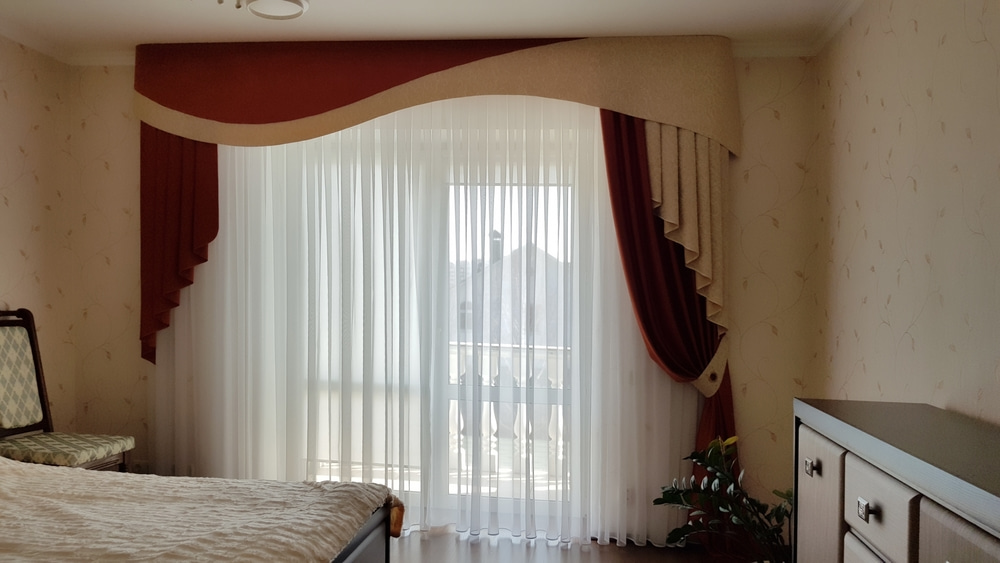
When it comes to custom window treatments, this matters more than it sounds. A contrast border along a leading edge changes the proportion of a panel, and a bullion fringe at the hem adds visual weight that makes a curtain hang better. These are old workroom techniques that never fully disappeared from custom drapery, and they’re the least expensive way to make designer window treatments look designed.
2. Dressmaker detail on the header
The other thing running through the house is tailoring. Several rooms feel like they borrowed a thing or two from the private act of getting dressed, with fabric, pattern and embellishment handled like a beautifully tailored dress. Think Gone with the Wind and luxury curtains turned into a makeshift ball gown with a NYC twist.
For windows, the header is where that shows:
- Goblet and cartridge pleats: Sculpted, interlined, and demanding of fabric with body
- Inverted and box pleats: Flat-fronted, tailored, and suited to a track
- Banded leading edges: A second fabric run down the vertical, in a contrasting tone
- Weighted hems: Chain or coin weights that decide how the fabric falls
None of this reads as decoration when it’s done properly. It reads as fit.
3. Fabric used as an integral part of the architecture
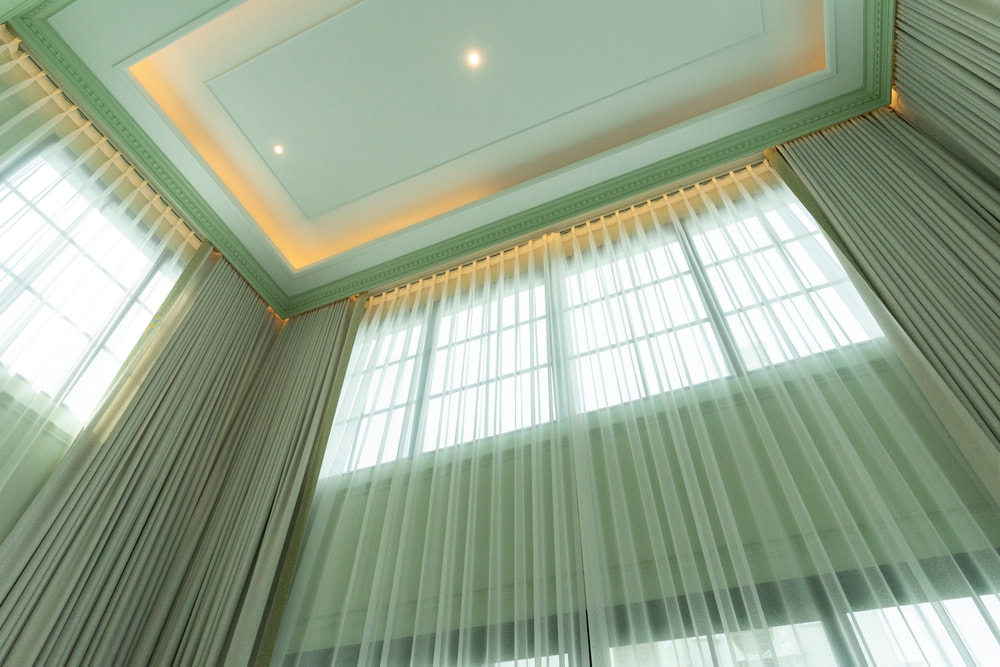
One of the most photographed spaces in the house is a small powder room where the ceiling has been dressed in a pleated canopy of sheer boucle, tailored flat with no swag to it. As one of the most effortless window treatment design trends in existence, it turns fabric into a playful backdrop, yielding its power to transform even a room with no architectural interest. A cornice does the same job on a smaller scale, closing the top of a window, hiding hardware, and lifting the apparent height of the wall.
4. Luminous and shimmering cloth
Flat matte fabric is losing ground. One room built its whole scheme on luminescent materials, including drapery in a shimmering weave that changes as you move past it, and the effect throughout the house is the interplay between fabric and light.
The fabrics encompassed by these high-end window treatments are the following:
- Silk and raw silk: The original, still unmatched for how it takes evening light
- Faux silk: More stable in direct sun, and a sensible choice on a bright exposure
- Velvet: Depth and shift in the pile, particularly in deeper tones
- Metallic-shot linens: Texture and glint together, without the formality of silk
5. Layered texture, visibly made
Texture carries the rooms where pattern could never. Grasscloth and hemp on ceilings, linen canvas on walls, woven cloths that show the hand of whoever made them. They reveal the creative process and workmanship behind the final product and custom window treatments in NYC make an excellent use case for this.
Windows are where this is the easiest to get right, because a curtain is the largest single piece of cloth in most rooms and it moves. A slubby linen reads differently at eleven in the morning than it does at six, and that variation is the whole appeal.
6. Pattern and palette, held in check
Plenty of pattern shows up in the house, but very little of it fights for attention. Rooms commit to one strong idea and let everything else go quiet, which is why a heavily striped bedroom still feels calm. The rule that seems to be operating is that when the walls are doing something loud, the windows go plain, and when the walls are quiet, the windows can carry the pattern.
7. Light, shadow and transparency
The most forward-looking room in the house has no window at all. It’s a primary bath built around mist as an idea, worked out in layered sheer textures that play light against shadow, and it treats transparency as a material in its own right.
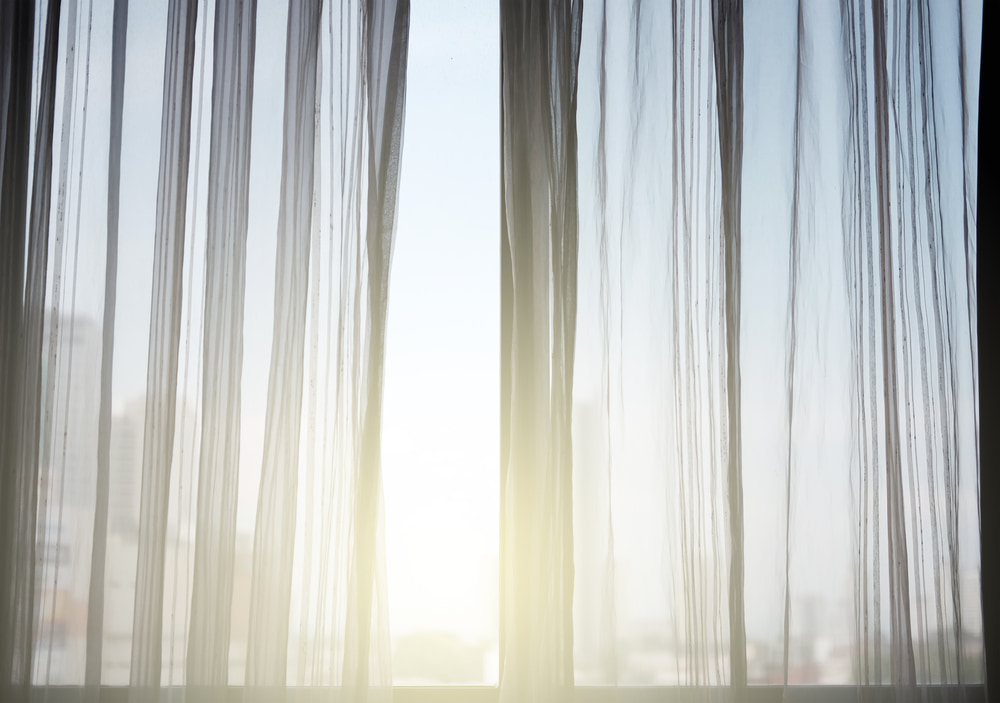
That’s the trend with the most practical reach for anyone in a city apartment. Sheers, vision shades with alternating solid and open bands, and light-filtering weaves all control what a room does with daylight without shutting it off. It reads as pure design, but it’s also solar control and energy efficiency at work, and that’s what earns its keep once the low fall sun arrives and fall glare starts hitting at eye level.
How are designers using fabric and texture differently this year?
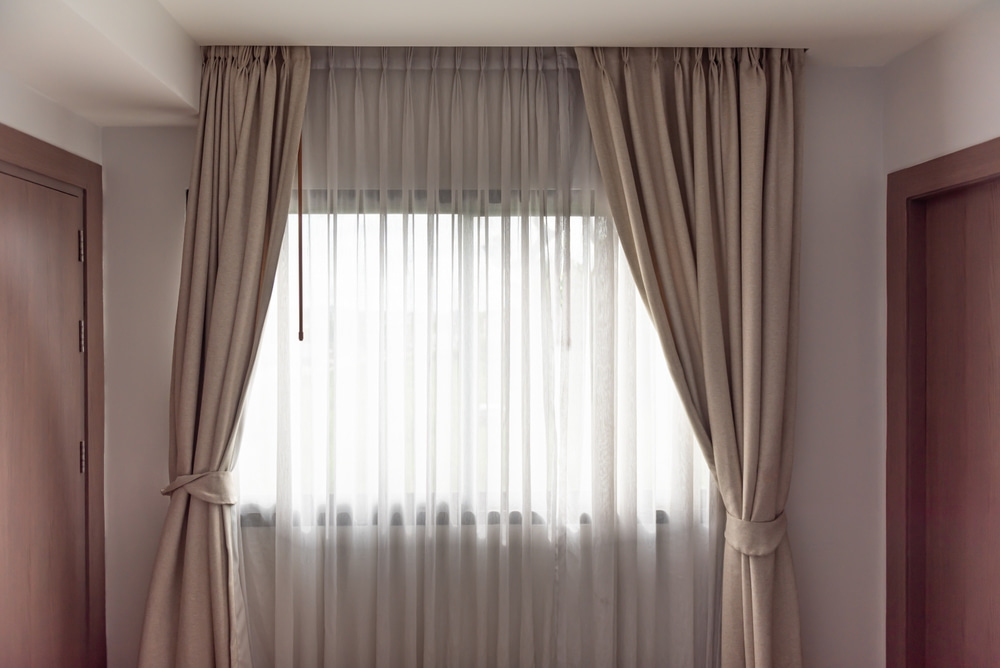
Designers are focusing on the weight rather than on color. That’s the difference a workroom makes on custom window treatments in NYC, since nothing here comes off a shelf in a preset weight, it gets cut for the room in front of it.
Three habits show up again and again:
Fabric chosen for how it behaves, not how it photographs
A swatch pinned to a board tells you almost nothing. The rooms that follow this particular designer window treatment use fabrics that were clearly tested at full height, in the natural light that lets them thrive, because a cloth that looks rich under gallery lighting can go grey and lifeless against a north-facing window.
Linings treated as part of the design
Lining used to be the invisible necessity. Here it’s a specification in its own right, chosen for how much light it passes, how much body it lends, and what it does to the color of the face fabric in front of it.
An interlining adds weight and acoustic softness on top of that, which is worth more in an apartment than in a townhouse. It’s also the difference between a pleat that holds its shape for a decade and one that sags by spring.
The same cloth in several weights
One of this year’s most easily identifiable designer window treatments is a pattern of one and the same fabric appearing two or three times across a room in different weights. A heavy version hangs at the window, a mid-weight covers a chair, a sheer version turns up as an inner layer. It’s a cheap way to make a room feel considered, and it avoids the matched-set look that makes a scheme feel ordered from one page.
What do these trends mean for curtains and shades?
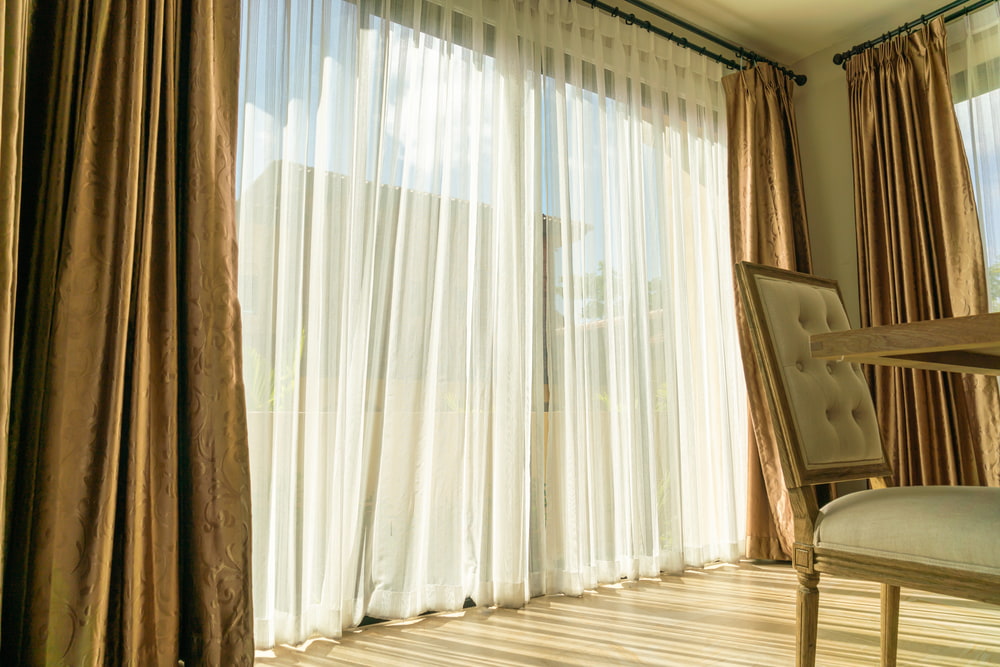
The biggest takeaway when it comes to shades and curtains is that the finishing matters more than the choice of fabric. Luxury curtains in NYC, and shades right alongside them, live or die on the header, the hem, the trim and the lining more than on the cloth itself, and that’s where the money should go. A good fabric hung flat still loses to a mid-weight linen with proper interlining, a hand-finished hem and a banded edge.
The process ends up looking like this:
- Budget the construction first: Fabric is easy to upgrade later, and the header is not
- Specify the pair together: The shade and the panel are one assembly, so they get measured and mounted as one
- Mount high and wide: Most of the height in these rooms comes from where the hardware sits, not from the ceiling
Something filters, something softens, and in these rooms, the two go up as one job, not two.
Which ideas work in an actual NYC apartment?
The ones that don’t need square footage. A townhouse gives designers thirteen-foot ceilings and walls with nothing on them, and most apartments give you neither.
Here’s roughly how Glamour Decorating Blinds & Shades of NYC has ranked these 7 trends:
- Trim and passementerie: Works anywhere, and costs the least of anything here
- Tailored headers: Works anywhere, though goblet pleats want height above eight feet
- Fabric as architecture: A cornice scales down well, a tented ceiling does not
- Luminous fabric: Works anywhere, with lining chosen for the exposure
- Layered texture: Works especially well in small rooms, where flat fabric looks cheap
- Restrained pattern: Works anywhere, and matters more in a small room
- Transparency and light control: The single most useful of the seven in a city apartment
Three constraints decide most of it.
The radiator under the window
Prewar buildings put steam radiators directly beneath the sill, which rules out floor-length panels in a lot of rooms. Sill-length drapery still takes trim, still takes a tailored header, and still reads as custom. A cornice above the window pulls the eye upward and compensates for the shorter drop.
The depth of the reveal
Behind the luxury curtains, inside mounts need somewhere to sit. Older windows often have four inches or less of usable depth, which limits what can be fitted behind the frame and pushes the decision outward. An outside mount solves it and gains height at the same time, provided there’s wall above the frame to work with.
The building thirty feet away
Daytime privacy stops being an afterthought when someone else’s living room faces yours. A sheer or a light-filtering shade handles the day, and a heavier panel or a blackout layer handles the night, which is why the two get planned together.
Which emerging trends are likely to carry into 2027?
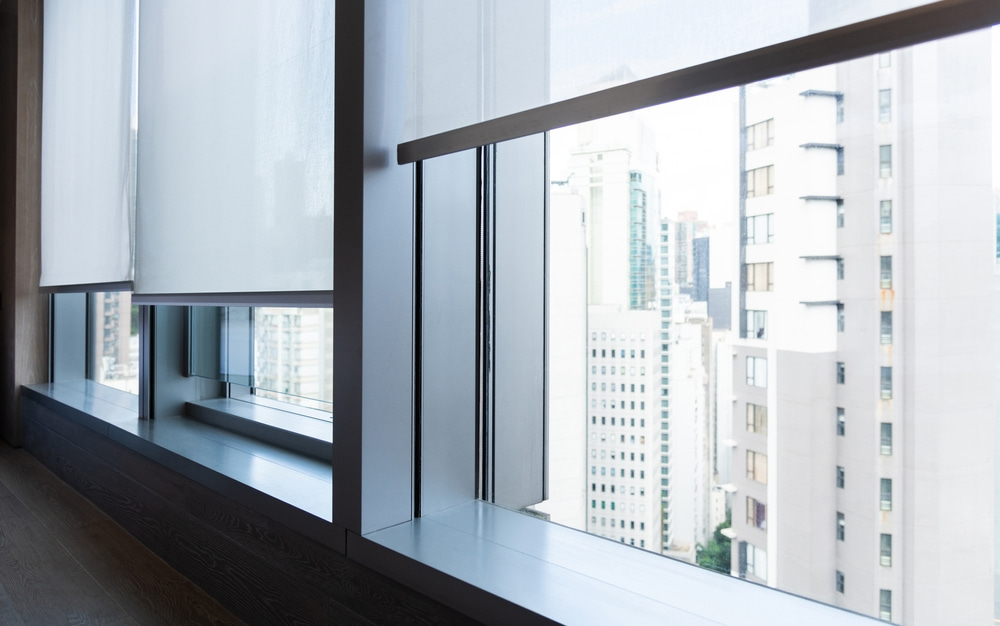
In the professional opinion of all of us here at Glamour Decorating Blinds & Shades of NYC, the trends that are here to stay in 2027 are trim, tailoring, and transparency. The rest fade back into being occasional choices rather than a movement.
What sticks
Trim and tailored headers cost little to try and never depend on a color staying fashionable, so they carry forward with almost no resistance. A tassel or a banded edge slots onto an existing panel without remaking it, which is usually enough reason for a workroom to keep reaching for both.
What narrows
Luminous fabric settles into dining rooms and bedrooms, where evening light gives it something to do. Fabric on ceilings stays a show house move. Cornices keep spreading regardless, since they solve a real problem at the top of a window.
What to watch
Sheers have been a finishing layer for years, but this year they’re the design. With how much new glass has gone up across Manhattan and Long Island City, transparency is one of the window treatment design trends most likely to reach ordinary homes by 2027.
Who designs and builds luxury window treatments for homes in NYC?
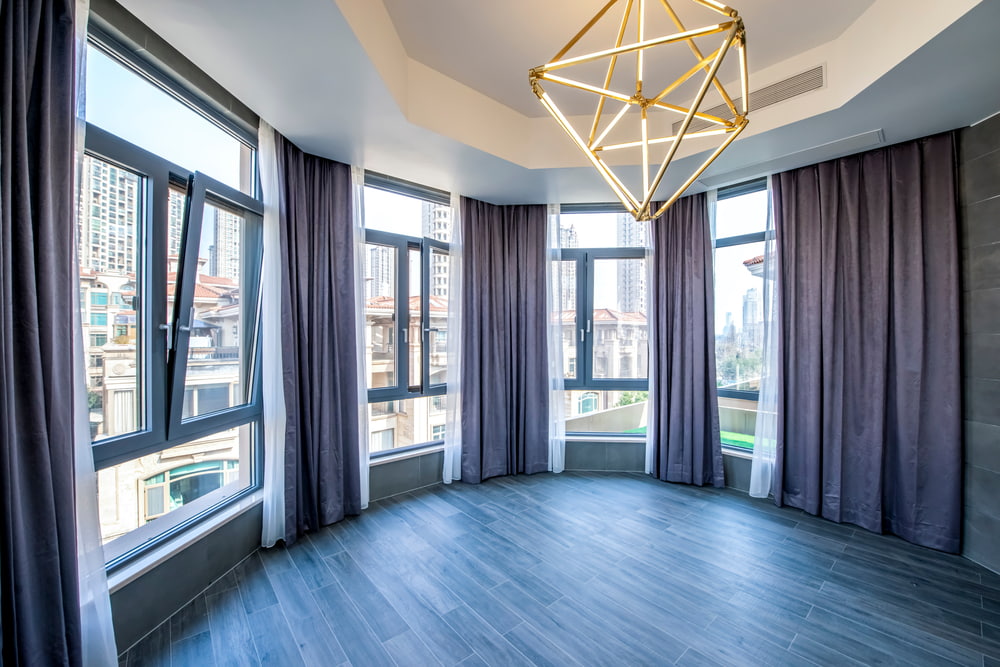
Glamour Decorating Blinds & Shades of NYC has spent more than thirty years making the kind of work this show house is full of. Cornices, valances, interlined drapery, sculpted pleat headers, contrast trim, Roman and roller shades, and Somfy motorisation, nearly all cut and sewn in our own Brooklyn workroom.
That’s what lets us build high-end window treatments to trend, not off a shelf. We make the top treatment and the drapery it sits on in the same workroom, at the same time, so a banded leading edge or a weighted hem actually matches what’s underneath it.
We’ve completed over 1,500 projects across the city, we partner with Safavieh, and we back Somfy motors with a five-year warranty. Whether your apartment overlooks Washington Square Park or sits out in Long Island, we bring the fabrics to you, measure on site, and install everything ourselves.
Tell us which of these ideas caught your eye and we’ll work out what it looks like on your windows. Request a quote to get started.