Table of Contents:
Key takeaways:
- Warm, earthy color has replaced the cool grays that ran the last decade.
- Texture is carrying the visual weight that bold pattern used to.
- Layering is now the default approach rather than a designer flourish.
- Motorization has shifted from an upgrade to a baseline specification.
- Traditional top treatments like cornices and valances are back in play.
Window treatments are becoming a much bigger part of the design conversation in 2026. Fabric is returning to rooms in more interesting ways, natural materials are gaining ground, and even familiar shades and blinds are being reconsidered through new colors, textures, and combinations. But window treatment trends that may look good in a design forecast still have to make sense on an actual New York window.
That is where things get more interesting. Light, privacy, window proportions, nearby buildings, radiators, and the architecture of the apartment can all change whether a particular trend works beautifully or becomes more trouble than it is worth. At Glamour Decorating Blinds & Shades of NYC, we see firsthand how much the right treatment depends on the room around it, not simply what happens to be popular that year.
We took a closer look at the current window treatment trends for 2026 and narrowed the conversation down to eight worth knowing about. Some translate especially well to New York apartments, some need a little adaptation, and a few may be better left on the inspiration board.
What are the biggest window treatment trends for 2026?
The dominant 2026 window treatment trends in NYC are warmer colors, tactile natural fabric, layered combinations, and motorization built in from the start rather than added later. Underneath all four is the same shift of rooms being asked to feel comfortable instead of just photographing well.
1. Warm, earthy color instead of cool gray
The gray era is over, and it has taken the cold whites with it. What is replacing it is a palette borrowed from outside, like moss and olive, clay and terracotta, oat and sand, warm putty. The change is subtle in a swatch and obvious on a wall of fabric, because a warm neutral picks up lamplight in the evening where a cool one goes flat and slightly gray.
In practice, this shows up most in drapery, where there is enough fabric for an undertone to register. On a roller shade, it matters less than people expect. Deeper accents are around too, mostly plum, navy, and forest green, and mostly in dining rooms and studies rather than everywhere at once.
2. Texture doing the work pattern used to do
If one thing separates a 2026 room from a 2019 one, it is that the interest comes from the weave rather than the print. Linen with visible slubs, wool blends, nubby cottons, raw silk, and heavier textured weaves all read as considered without adding a motif you have to live with.
There is a practical reason this works well in apartments. Texture holds up under changing light, and a city window gets a lot of that, from direct sun in the morning to the reflected glare off the building across the street by three to the artificial light after six. A flat woven fabric can look washed out at one of those hours, but a textured one keeps some depth throughout.
Fabrics that keep coming up:
- Linen and linen blends: The default for anything meant to filter light rather than block it
- Wool and wool blends: More body, better for drapery that needs to hang with weight
- Raw and faux silk: Still the choice when a room needs a little formality
- Textured cottons: Quieter, and easier to clean than most of the alternatives
3. Layering as the default rather than the upgrade
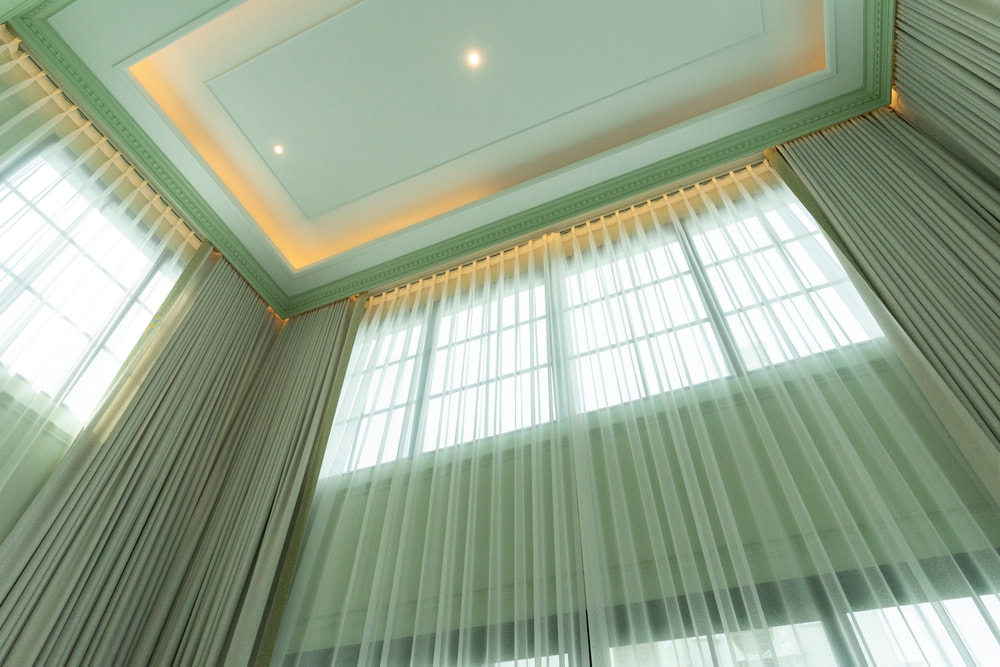
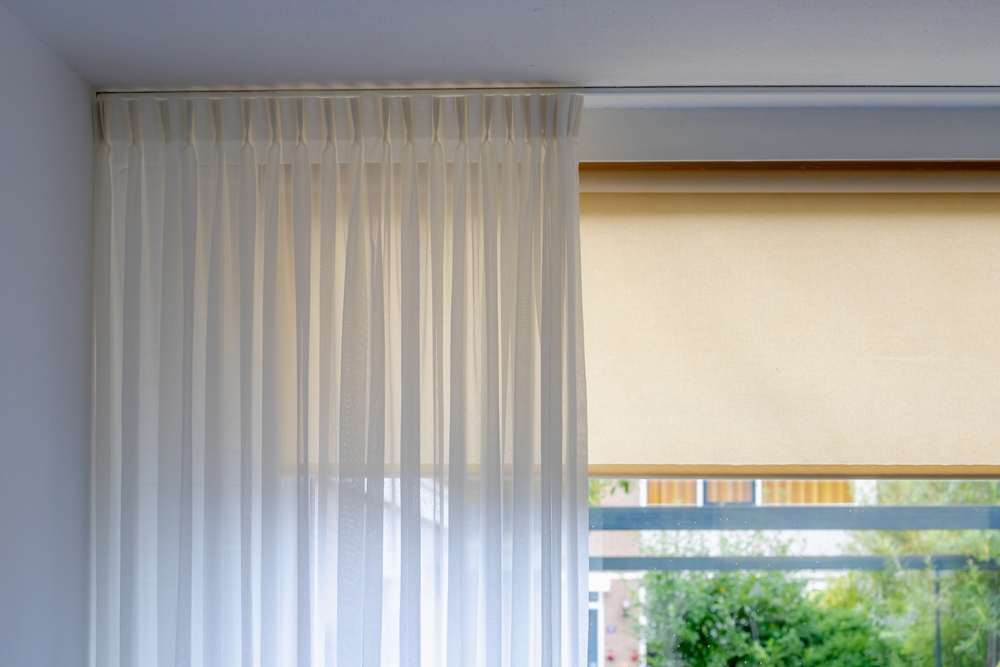
Pairing a working layer with a softer one is among the most cited current window treatment trends, and for once the trend and the practical answer point in the same direction. A shade handles glare, privacy, or blackout. A drapery panel handles softness, height, and the fact that a bare window makes a room look unfinished. At Glamour Decorating, we often plan these layers together so the shade, drapery, hardware, and available stack space work as one treatment rather than competing for room around the window.
The version that fails is the one where both layers are trying to be the feature. Decide which one is doing the practical work before you pick fabric for either, and make sure the panels have somewhere to stack that isn’t across the glass.
4. Motorization as a baseline spec, not a luxury add-on
Two years ago, motorization was the thing you added to one room. Now it turns up in the first conversation, especially in newer buildings where a single wall might hold four or five shades that ought to move together.
What has changed is less the motors and more the expectations around them. People want scheduling, grouping, and app control without a separate hub for every product, which is why platform choice matters more than it used to.
At Glamour Decorating, we fit Somfy systems, which run through the TaHoma app and connect to most major smart home platforms, so the power source and the control method get settled together rather than one being retrofitted around the other.
5. Solar and light-filtering fabrics for city glass
Glare is where the latest window treatment trends turn most practical in Manhattan and Long Island City. New buildings there come with a lot of glass and, very often, another glass tower directly opposite, so the room runs too bright and too hot. Covering the window fixes that and costs you the view you paid for.
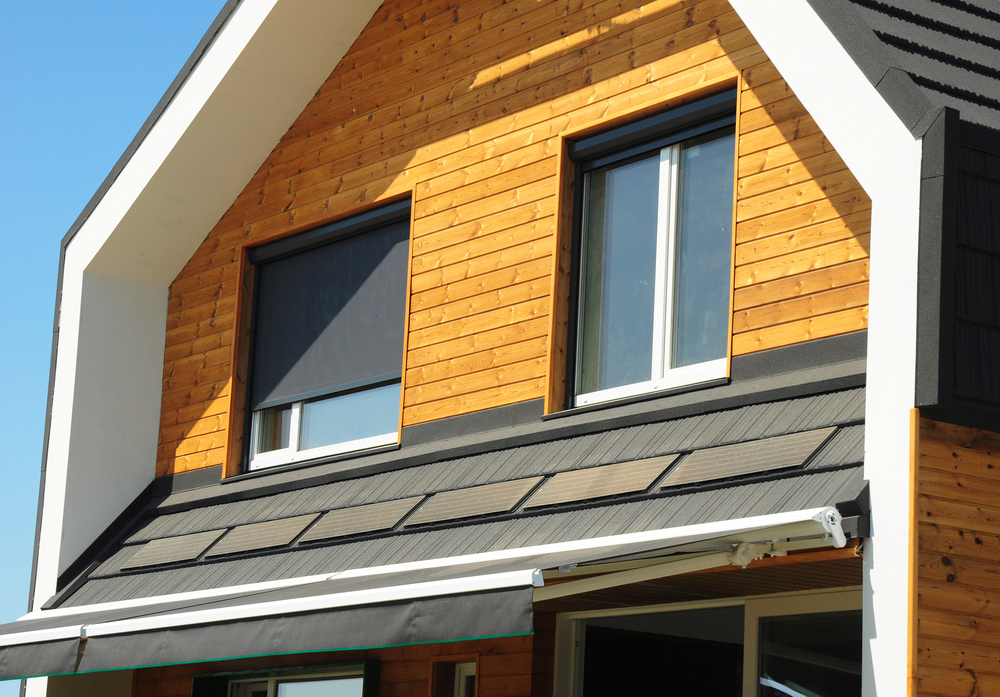
Solar screens have become the standard answer. Like most energy-efficient window coverings, they work by cutting glare and knocking back solar heat, and the openness factor of the weave determines how much visibility you keep. Tighter weaves give more privacy and less view.
6. Blackout treated as a specification rather than a fabric
Blackout has been the most misunderstood category for years, and 2026 is finally the year the conversation moved to fit. A blackout fabric with a half-inch gap down each side is a room-darkening shade with extra steps.
What is being specified now is the whole assembly: the fabric, the mount type, side channels where they will not look clumsy, and a header that doesn’t leak light along the top. It costs more than picking a dark fabric and hoping, and it is the difference between a bedroom that goes dark and one that nearly does.
7. Roman shades taking over from hard blinds
Where a room wants softness but has no wall space for panels, Roman shades keep winning. They bring fabric and fold to the opening without the stack width drapery needs, and they suit the current appetite for texture better than a slatted blind does.
They’re also unforgiving of poor fabrication, which is worth knowing before you order. The folds have to sit evenly, the fabric needs enough structure to hold its shape, and any pattern has to be positioned so it still reads when the shade is lowered.
8. Cornices, valances, and the modern traditional revival
This is the trend most people didn’t see coming. The revival is showing up in the details before the fabric, such as upholstered cornices, valances, tassels, contrast trim, and the goblet pleats leading the curtain styles trending in 2026, all in a warmer and less fussy register than the versions from the nineties.
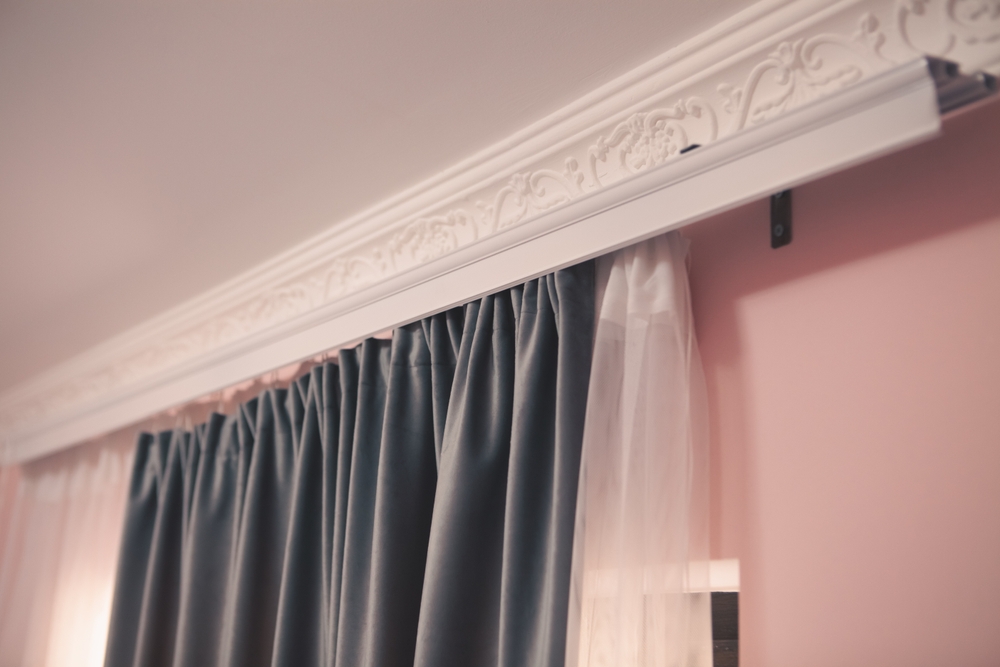
A cornice earns its place in a practical way too, since it hides a headrail, closes off the light gap along the top of a shade, and adds height when it is mounted above the frame. Of all the 2026 window treatment trends, this is the one that depends most on fabrication. At Glamour Decorating, we cut cornices and drapery together in our Brooklyn workroom, which gives us control over the proportions, fabric placement, and finishing details from the start.
Which 2026 window treatment trends actually suit an NYC apartment?
The ones that solve a real constraint. In a city apartment, the constraints are usually light, privacy after dark, a shallow or out-of-square opening, and a radiator sitting exactly where you wanted floor-length drapery.
Roughly how they sort out:
- Prewar apartments: Texture, warm color, Roman shades, and sill-length treatments where a radiator rules out panels
- Newer high-rises: Solar screens, motorization, and grouped shades across a wide window wall
- Street-facing rooms: Layering, because daytime and nighttime privacy are genuinely different problems
- Bedrooms: Proper blackout with the mount and channels planned, not just a dark fabric
- Small rooms with one window: Light-filtering fabric and a high mount, since anything high costs you the whole room
Which window treatment trends are on the way out?
A few familiar looks are starting to lose ground. Flat cool grays and stark hospital whites are among the most obvious, especially when they leave a room looking colder or flatter than intended. Warmer neutrals, softer whites, and more natural tones are taking their place. Shiny synthetic drapery fabrics are another style we are seeing less often, partly because their finish can look inexpensive next to linen, cotton, and other fabrics with more visible texture.
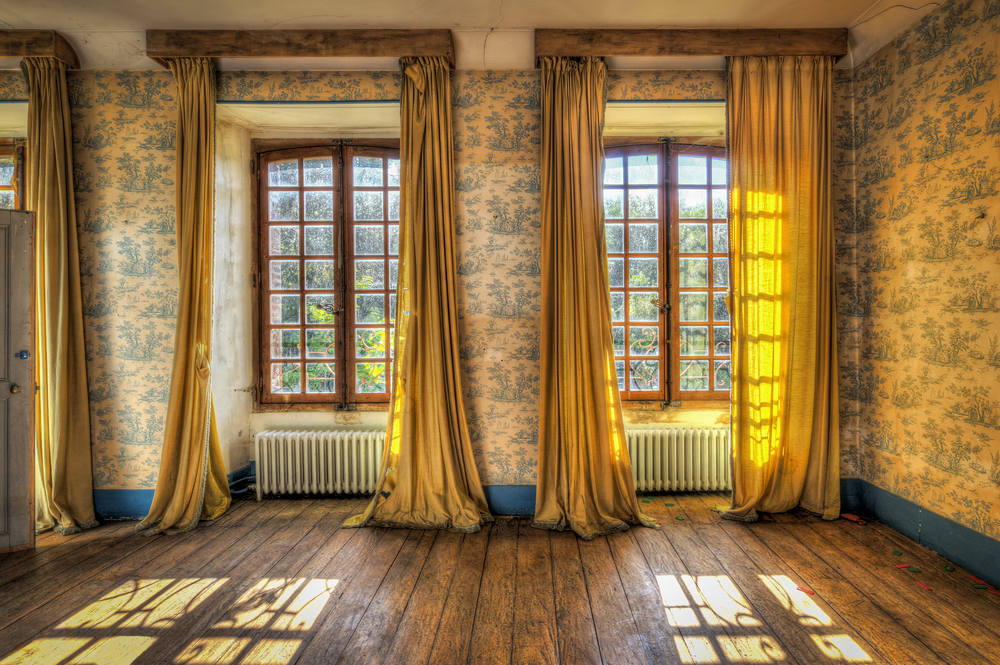
Heavily patterned curtain panels are also being used more selectively. Pattern itself is not disappearing, but oversized prints covering an entire window can dominate a room quickly, particularly in a smaller apartment. Designers are increasingly finding other ways to introduce character through texture, trim, subtle woven patterns, or a more interesting fabric color.
The fully bare window may be the biggest shift. It had a long run in minimalist interiors, but more homeowners are realizing that leaving every window untreated can make a room look unfinished and create obvious issues with privacy, glare, and light control. The direction for current window treatment trends is less about stripping windows back and more about finding solutions that contribute to the room without overwhelming it.
How do you follow a trend without dating the room?
Put the trend where it’s cheap to change. Fabric color, trim, and hardware are the parts of a window treatment you can revisit in a few years without redoing the whole thing. Structure, mounting, and motorization are not, so those should be decided based on function.
Cost follows the same split. The factors that shape window treatment pricing sit mostly in the permanent half, so a room where you have picked the structure well can absorb a change of fabric later without much pain.
A useful filter before ordering:
- Does this solve a problem the room actually has?
- Would it still look reasonable if the wall color changed?
- Is the trendy part the fabric, or the thing bolted to the wall?
- Does it work with the window’s depth, height, and whatever sits under it?
Where can you see 2026 window treatment trends in person in New York?
Glamour Decorating has been building custom shades, blinds, and drapes for New York rooms for more than thirty years, with a Brooklyn workroom, a showroom on Madison Avenue, and over 1,500 completed projects behind us.
Trend photos are useful for narrowing things down and not much use after that, because a fabric behaves differently once it is at full scale in your own light. We bring samples to the space, measure on site, and build to the opening, whether the room is a prewar apartment near Madison Square Park or a new tower in Long Island City.
Tell us what’s not working about your windows now, and we will help you sort out which of this year’s ideas are worth your money. Request a quote to get started.