Table of Contents:
Key takeaways:
- Quality motorized blinds are built for years of daily use, with quiet motors and minimal maintenance requirements.
- Battery-powered and rechargeable shades can be installed without opening walls or running electrical wiring.
- Somfy motorized shades can operate through remotes, wall controls, apps, and smart home systems, depending on the setup.
- Motorization works with roller shades, Roman shades, and drapery, regardless of whether the windows are large or small.
- Cordless operation makes motorized blinds a safer choice for homes with children and pets, while scheduling adds everyday convenience.
Motorized blinds in NYC offer a convenient way to manage light and privacy, yet plenty of New York homeowners still have reservations about making the switch. Are the motors noisy? How often do the batteries need replacing? And what happens when the Wi-Fi goes down? These are reasonable questions, but much of what people have heard comes from older systems or misconceptions about how the technology works.
At Glamour Decorating Blinds & Shades of NYC, we regularly address these concerns when helping clients choose window treatments for everything from prewar apartments to modern high-rises. Below, we break down the most common myths about motorized blinds, explain what today’s systems can actually do, and highlight a few limitations worth considering before installation.
Are motorized blinds reliable?
Modern motorized blinds are designed to handle years of regular use, making them a dependable option for both residential and commercial spaces. However, reliability depends on several factors, including motor quality, proper installation, and the power source you choose. Concerns about frequent breakdowns and short battery life are still common, but today’s systems have come a long way in addressing them.
Myth #1: Motorized blinds break easily
Quality motorized blinds hold up for years of daily use, and the parts that matter most come with long manufacturer coverage. Glamour Decorating Blinds & Shades of NYC installs Somfy motorized shades, and Somfy backs its motors and controls with a five-year warranty against defects in materials and workmanship. If a covered motor fails under normal use in that window, it gets repaired or replaced at no cost.
Most of the breakdown stories people repeat trace back to one of two things. Either the motor was too small for the shade it had to lift, or the shade was mounted slightly out of line and dragged against the frame every time it moved.
A heavy blackout shade or a wide fabric panel needs a motor sized for that weight, and the brackets need to sit level. That’s why with motorized blinds, installation by a skilled professional matters as much as the hardware itself.
Myth #2: The batteries die all the time
Battery-powered motorized blinds need charging now and then, nowhere near constantly, and battery power is only one of four options. How often a shade needs attention depends on its size, its weight, and how many times a day it moves.
Here’s how the power options compare:
- Rechargeable battery: A built-in battery you top up with a charger, with no replacement batteries to buy
- Replaceable battery: Standard battery packs swapped out when they run low
- Plug-in: Runs from a nearby outlet, so there’s nothing to charge at all
- Hardwired: Connected to your home’s electrical system and planned in during a renovation
The one place batteries deserve real thought is a window you struggle to reach. A rechargeable shade over a stairwell or high on a double-height wall is a different job from one beside the sofa, so charging access gets settled before the shade is ordered.
Myth #3: They’re too loud for a bedroom
Modern motorized blinds run quietly enough for bedrooms and nurseries, and the motor only makes a sound during the few seconds the shade is moving. Motors in quality systems sit inside the roller tube or headrail, which muffles them further. A shade set to open at seven will make less noise than the alarm clock beside it.

Do motorized blinds work when the power goes out?
A motorized blind might open and close several times a day, so it’s reasonable to wonder how well the mechanism holds up over time. The answer depends on more than the motor itself. Shade weight, installation quality, power source, and frequency of use all play a part in long-term performance. Modern systems are built for regular operation, but some common concerns about durability, battery life, and noise are still worth examining.
Myth #4: An outage leaves your blinds stuck
Battery-powered motorized blinds don’t draw anything from the wall, so a blackout in the building doesn’t affect them. You’re still free to raise them for daylight or lower them at night with the remote in your hand.
Plug-in and hardwired motorized shades do stop moving when the power goes out, and they pick up where they left off once it returns. If outages are a real concern in your building, that’s one more reason to put a battery or rechargeable motor on the windows you use most.
Myth #5: You need a smartphone to control them
Smart blinds work perfectly well without a phone, and the app is one control option among several. Plenty of clients never download it at all.
The ways to run Somfy motorized shades include:
- Handheld remote: The simplest option, and enough for a single room
- Wall control: A fixed switch that never goes missing between the sofa cushions
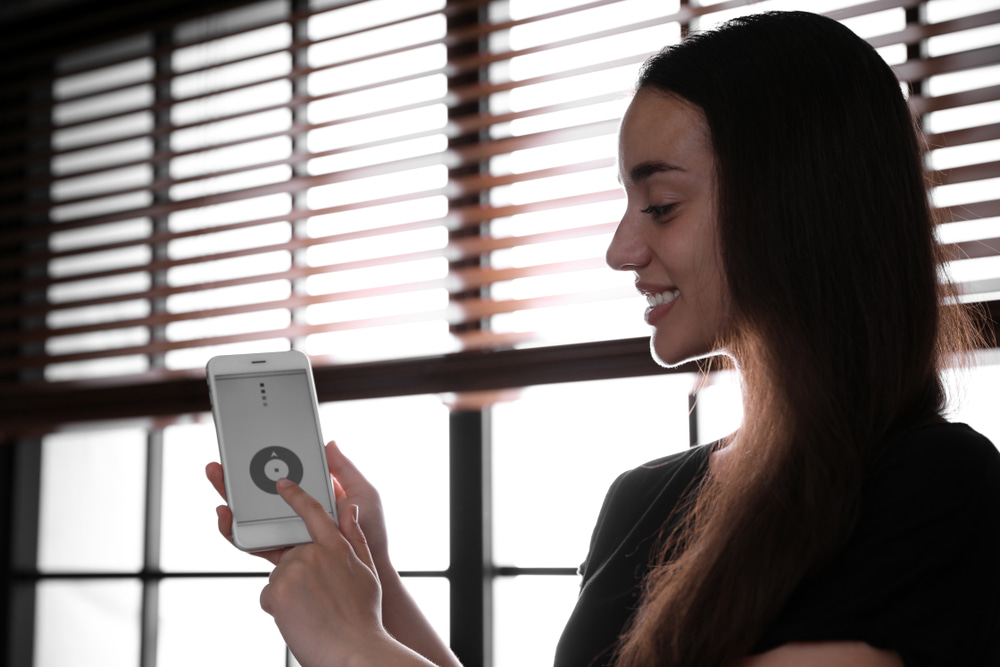
- Somfy TaHoma app: Scheduling, scenes, and control from anywhere, including a “Holiday” scene that moves the shades while you’re away
- Sensors: Shades adjust on their own to strong morning sun or a change in the weather
- Voice control: Through the smart home system you already use
A remote and a wall control talk to the motor without going through your home network, so a router outage leaves them working normally. The app adds remote access and automation on top of that, and you’re free to start with a remote and add the app later.
The app becomes particularly useful when controlling multiple shades. Every shade along one wall can move together with a single tap, and routines can be set for different rooms throughout the day, so the living room shades lower for afternoon sun while the bedroom stays untouched.
Do motorized blinds need to be hardwired?
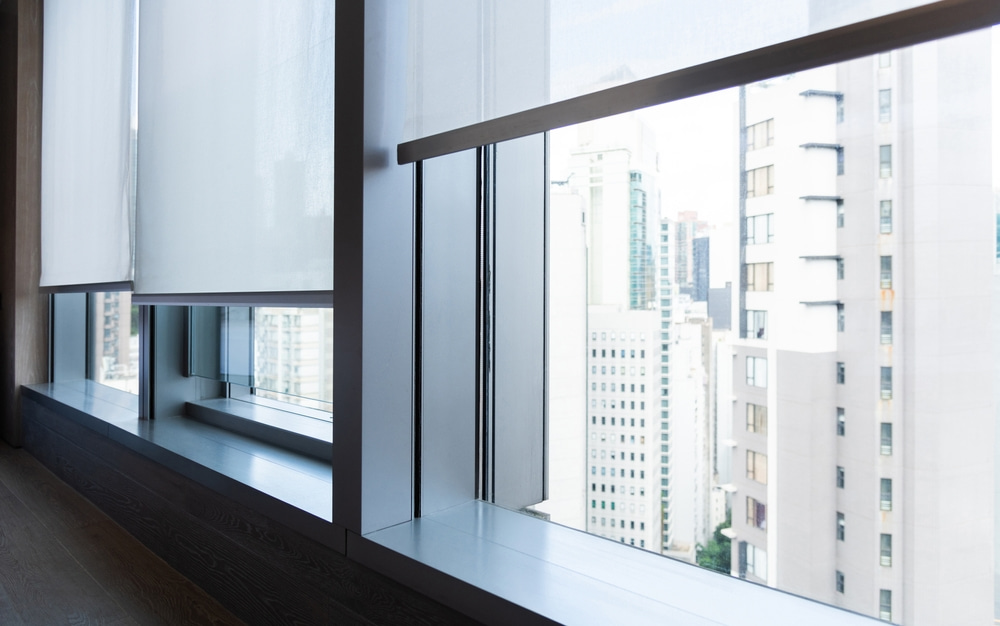
Motorized blinds don’t need to be hardwired, and most NYC apartments never open a wall to get them. Hardwiring is one of four power options, and it suits renovations far better than finished homes.
Myth #6: Motorizing means opening up your walls
Battery-powered and plug-in motorized blinds mount on the window frame or the wall above it, the same way manual shades do, with no electrical work involved. The right route depends mostly on what stage your home is at.
Finished apartments and rentals
Battery-powered motorized blinds are the usual answer in a finished apartment. There’s no wiring, no patching, and no painting afterward. That matters in a co-op or condo, where electrical work typically needs board approval and a licensed electrician, and in a rental, where opening walls is off the table from the start. When you move, battery-powered shades come down the same way they went up, with nothing left behind in the wall.
If an outlet already sits near the window, a plug-in motor works too, as long as the cord runs neatly along the frame. Our installers plan that route during the measure so the finished window looks as clean as a battery setup.
Renovations and new builds
Hardwired motorized shades make the most sense when the walls are already open. During a gut renovation, the wiring runs to each window before the drywall goes back up, and the result is a system with no batteries and no visible cords at all.
This needs to be coordinated with your contractor early in the renovation. Once the walls are finished, adding wiring for these types of window treatments can mean opening them up again, bringing additional work and expense.
What types of window treatments can be motorized?
Motorization isn’t limited to a particular window size or interior style. While it’s often associated with large windows and contemporary roller shades, the technology can be adapted to a much wider range of applications. Understanding which window treatments can be motorized and where the technology makes practical sense helps clear up two common misconceptions.
Myth #7: Only sleek roller shades can be motorized
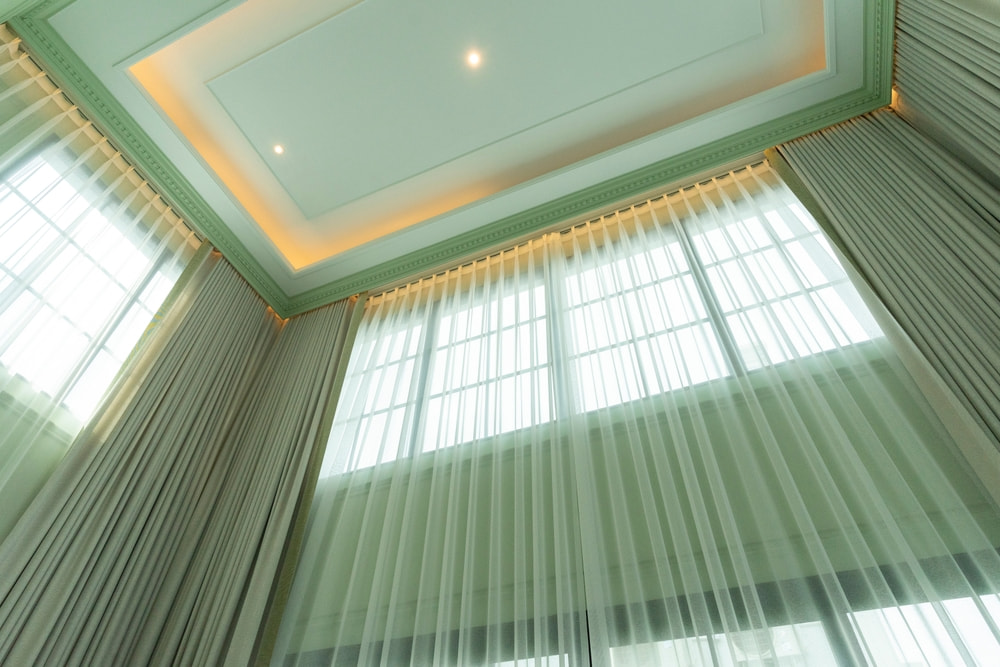
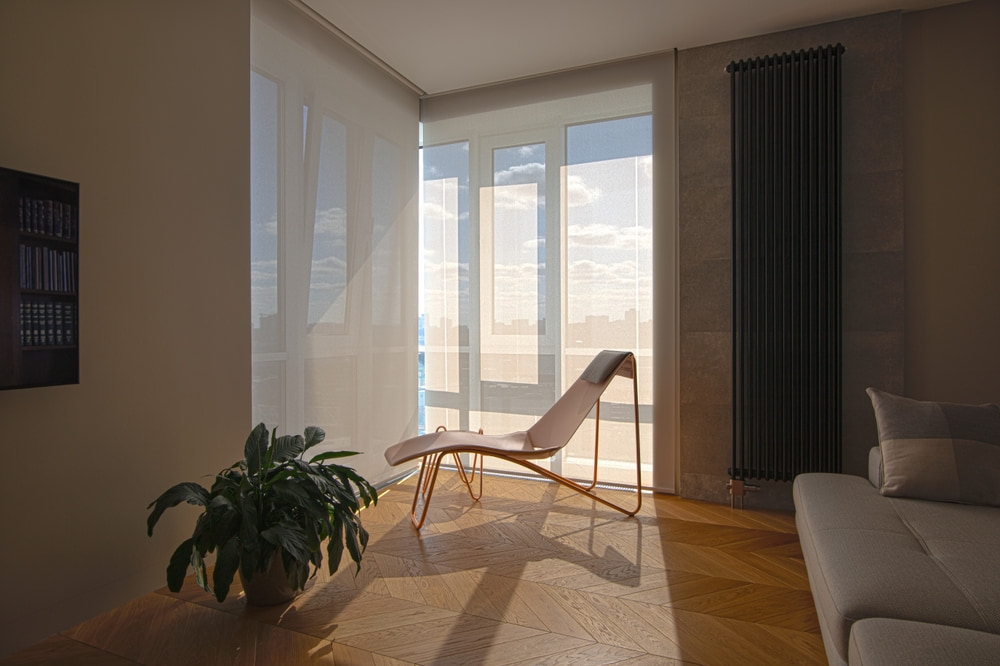
Roller shades may be the most recognizable motorized option, but the technology isn’t limited to contemporary window treatments. Different types of Roman shades can be motorized, along with traditional drapery styles such as pinch pleat, inverted pleat, and box pleat panels. Glamour Decorating Blinds & Shades of NYC offers motorization across these styles, allowing homeowners to enjoy automated controls without compromising the look they want for their space.
However, each style moves in its own way:
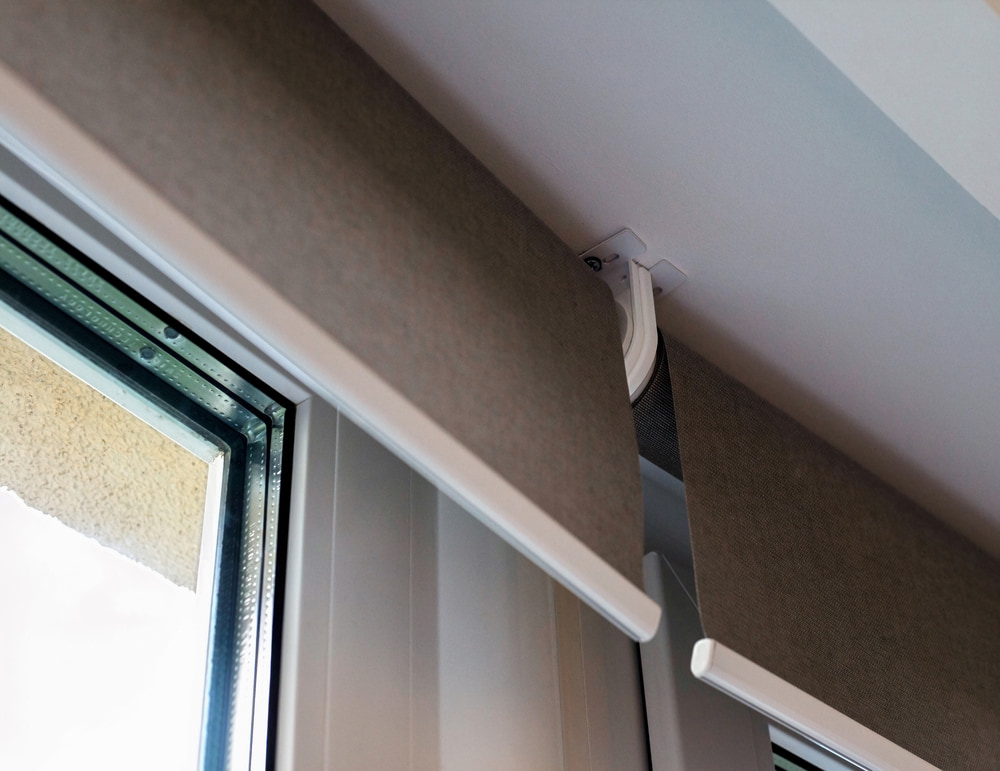
- Roller shades: The fabric winds around a tube hidden in the headrail
- Roman shades: The fabric lifts into neat horizontal folds as it rises
- Drapery: Panels glide sideways along a track and stack at the edges of the window
Layered setups work as well. A motorized solar shade handles daytime glare while motorized drapes close over it at night, and both run from the same remote or app, which makes automated window treatments far easier to live with than two separate cords.
Myth #8: Motorization only makes sense on huge windows
Smart blinds can be just as practical on smaller windows, especially those you adjust frequently or find difficult to reach. A bedroom shade that closes at night and opens in the morning, a nursery window you’d rather not reach over a crib to adjust, or a single window tucked behind a sofa can all benefit from motorization. Large windows simply make the convenience more obvious, and many homeowners start with one room before deciding to automate others.
Are motorized blinds safe for kids and pets?
Window treatment safety is an important consideration in homes with young children or pets, particularly when it comes to accessible cords and chains. Motorized blinds eliminate the need for these traditional operating mechanisms, reducing one of the most significant hazards associated with window coverings. Despite this advantage, some homeowners still question whether adding a motor introduces new safety concerns.
Myth #9: Motorized blinds add risk around kids and pets
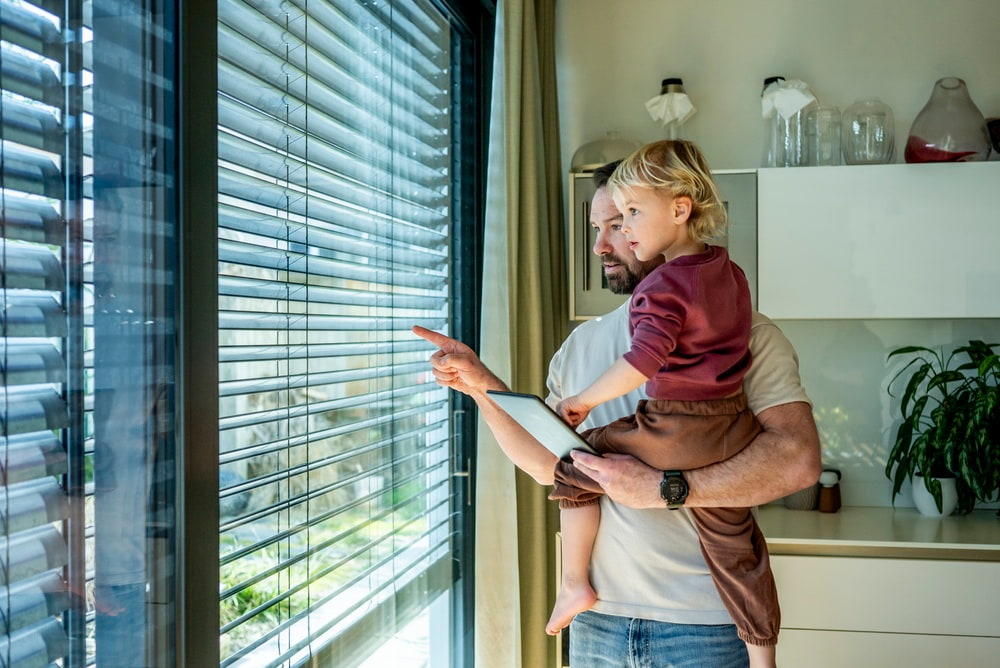
Cordless window treatments remove the hazard that safety agencies have warned about for years. Federal guidance on the risks tied to window covering cords points families with young children toward cordless products, and motorized shades are cordless by design.
Nothing hangs within reach of a toddler or a curious cat, and there’s no loop to tangle in. Cordless window treatments also keep the window itself tidier, with no pulls looped around a cleat or trailing onto the sill.
Glamour Decorating regularly recommends motorization for nurseries, playrooms, and family rooms first for exactly that reason. Scheduling helps here too, since a nursery shade closes for naptime on its own without anyone tiptoeing in to pull it down.
Safety covers the home itself as well. The Holiday scene in the Somfy TaHoma app raises and lowers your shades on a varied routine while you travel, so an empty apartment still looks lived in from the street.
Are motorized blinds worth it?
Motorized blinds are worth it for windows you use daily, windows that are hard to reach, and rooms where light or privacy changes through the day. A few of the skeptics’ points do hold some truth, though, and it’s fair to name them.
Where the doubts have a point:
- They cost more: Motorized blinds carry a higher upfront price than manual ones because of the motor, power source, and controls
- Batteries need some attention: Battery-powered models need occasional charging, so access to the window matters
- Installation isn’t a DIY job: Motor sizing, mounting, and programming all affect how well the system runs for years
None of these are reasons to skip motorization. They’re reasons to put it where it matters most.
The cost question also gets easier when you motorize in stages. Starting with the two or three windows you adjust most spreads the investment out, and every shade added later joins the same remote, app, and schedules.
Where motorized blinds pay off first
Some windows give back far more than others once they’re motorized. These are the ones we usually suggest starting with:
- Bedrooms: Blackout shades that close at night and open with your alarm
- Nurseries: Cord-free shades that adjust without anyone leaning over a crib
- Home offices: Glare control timed to the hours the sun hits your screen
- Hard-to-reach windows: Anything behind furniture, above a stairwell, or high on a tall wall
A guest room you rarely use stays manual without much lost, and it’s easy to add later if your habits change.
Who installs Somfy motorized blinds in NYC?
Glamour Decorating has been installing motorized blinds and shades across the five boroughs, Long Island, and New Jersey for more than thirty years. Our team installs Somfy motorized shades, fabricates custom shades and drapery in our own Brooklyn workroom, and has completed more than 1,500 projects for homeowners, designers, and businesses.
For motorized blinds, installation starts with a visit to your home. We size each motor to its shade, plan the power source around your building, and set up every remote, schedule, and app before we leave. Somfy motors and controls come with a five-year warranty, and interest-free financing is available. Whether you live near Gramercy Park or in a new tower across the river, we’ll bring samples to you, measure on site, and handle the installation ourselves.
Request a quote, and we’ll help you decide which of your windows are worth motorizing first.